
Trend Analysis | Accelerators, ABF Substrate, InP
Look into 3 different areas of the AI trade.

Disclaimer: This is not financial advice. Do your own research.
This is a new initiative I have taken where I analyze different AI trades with the information I have derived from personal assessment and third party sources.
I intend to analyze different areas of the AI trade at least once a month, highlighting the direction of the trade for the short term and long term.
In this article, I will be covering the trend in pricing, supply/demand, and volume for:
Accelerators
ABF Substrate
InP
Accelerators
Accelerators have become a heavily competitive market. This market is not limited to GPUs, it includes CPUs and ASICs as well.
According to BofA, in CY24, Nvidia controlled 85% of the accelerator market. Today? 76.6%.

Nvidia continues to have the leading market share and pricing power in this market (75% gross margins!), but ASICs are pushing against Nvidia as a cheaper alternative and supportive compute performance for several different companies.
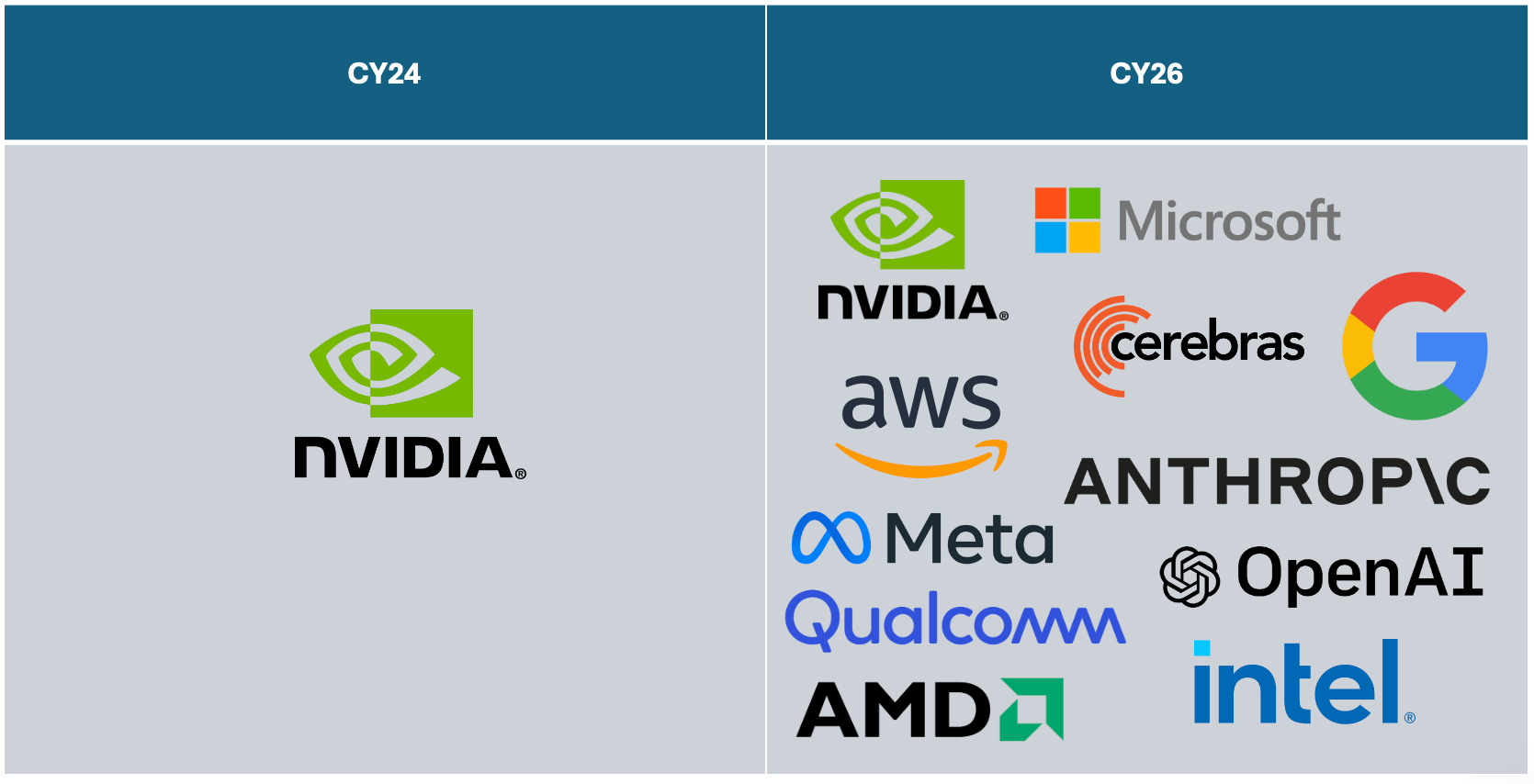
Although Nvidia was technically not the only player in 2024, the market share off of shipment volume alone was favoring Nvidia incredibly. Today, it has completely changed.
From 1 player to 11 players in a single market, all fighting for market share and waging a price war (or trying to), and this is not inclusive of many of the Chinese competitors that have risen: Huawei, Moore Threads, Cambricon, Hygon, etc.
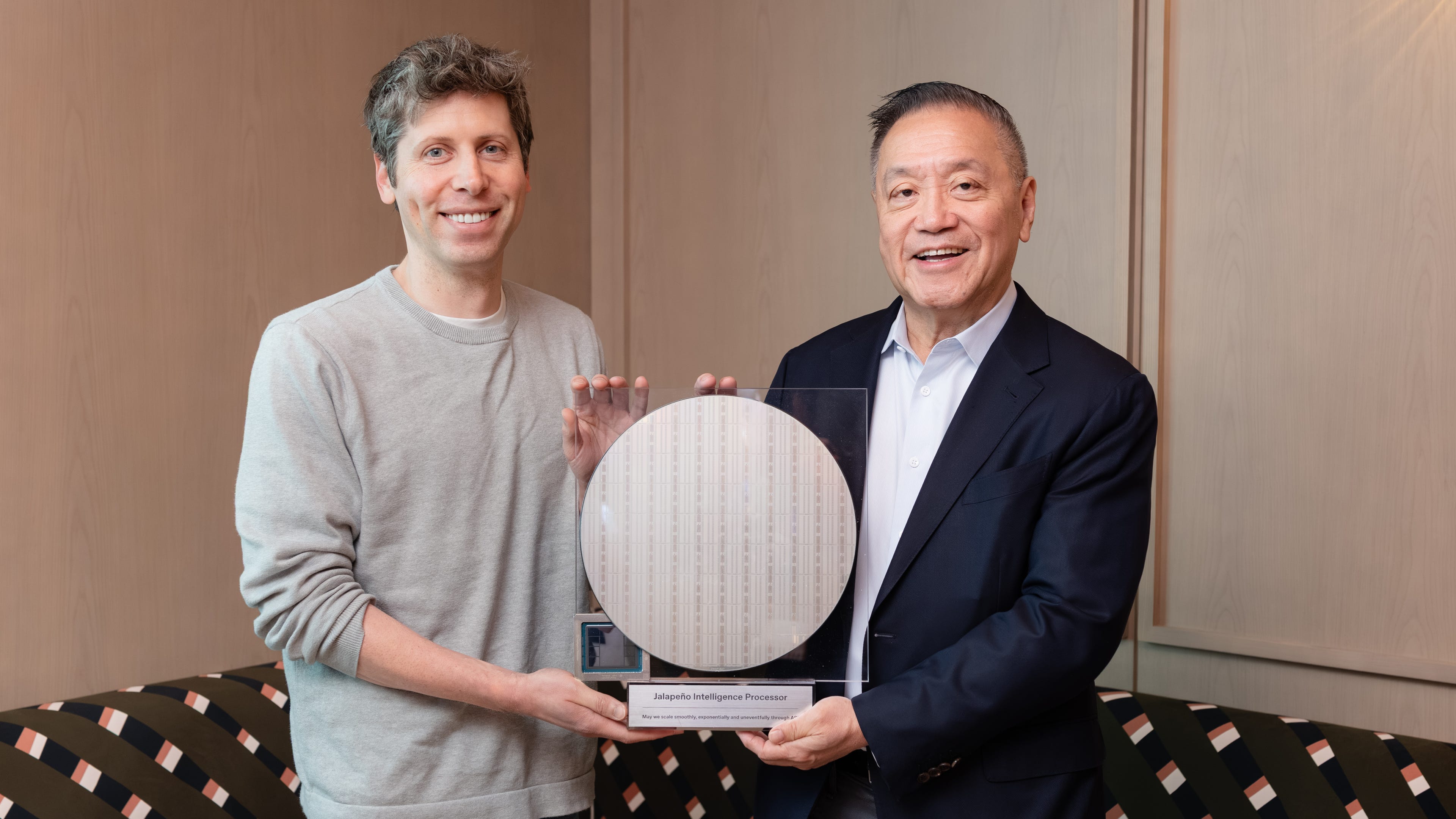
The reason behind this is because all of these companies saw one company lead the market with no alternatives, leading to unfavorable pricing power and no one to challenge them. This monopolistic behavior is favorable to one party (the seller) but not the buyers, and in order to try to break them, all of them are engaging in custom silicon. Even OpenAI and Anthropic are now working towards their own chips, especially OpenAI with a chip named “Jalapeno.” This custom inference chip was done in collaboration with Broadcom.
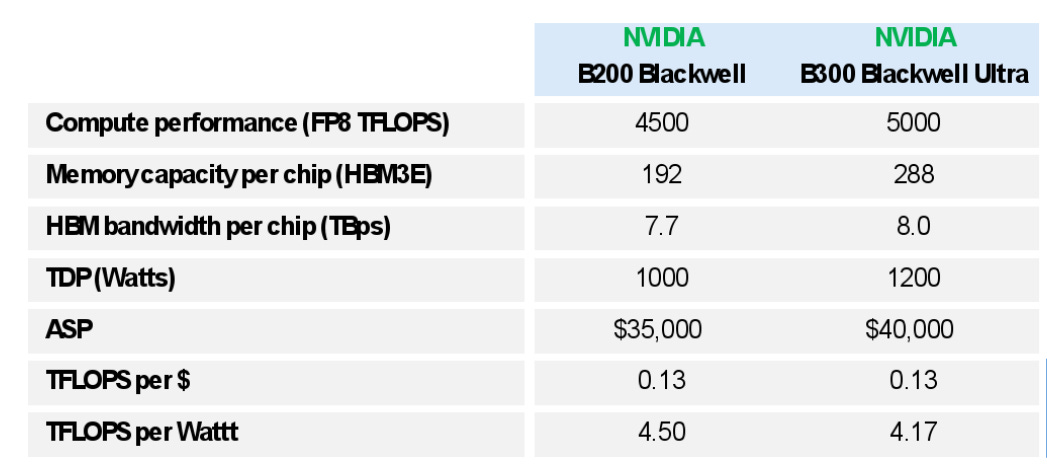
The ASP difference between Nvidia’s chips and ASICs is incredible, anywhere between 3-8x less in cost, when compared to Nvidia’s B200 and B300 .
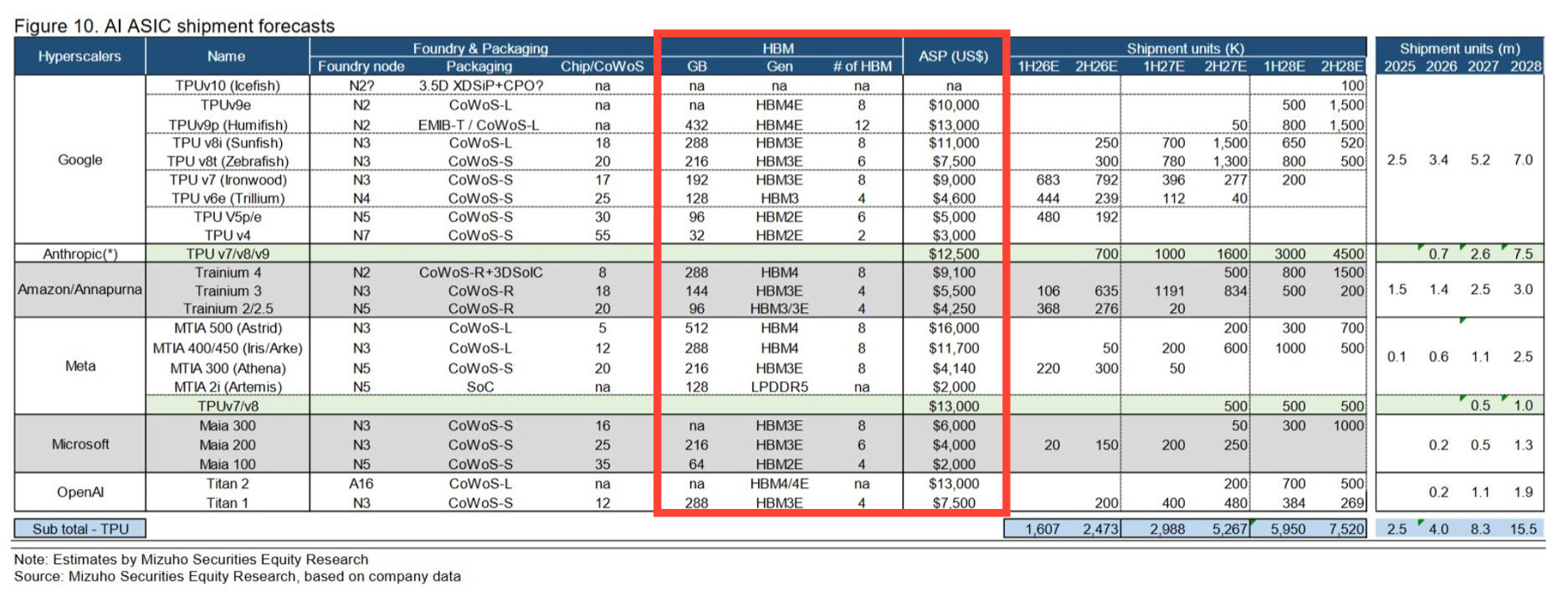
Now, this is just the GPU and ASICs side of the market. For CPUs, it is similar but a more interesting dynamic. Intel and AMD are basically the leaders in CPUs right now, and at one point, it was Intel leading in market share of 90+% for decades. An undisputed monopoly in this field. However, it has become a lot more competitive in the server CPU market.
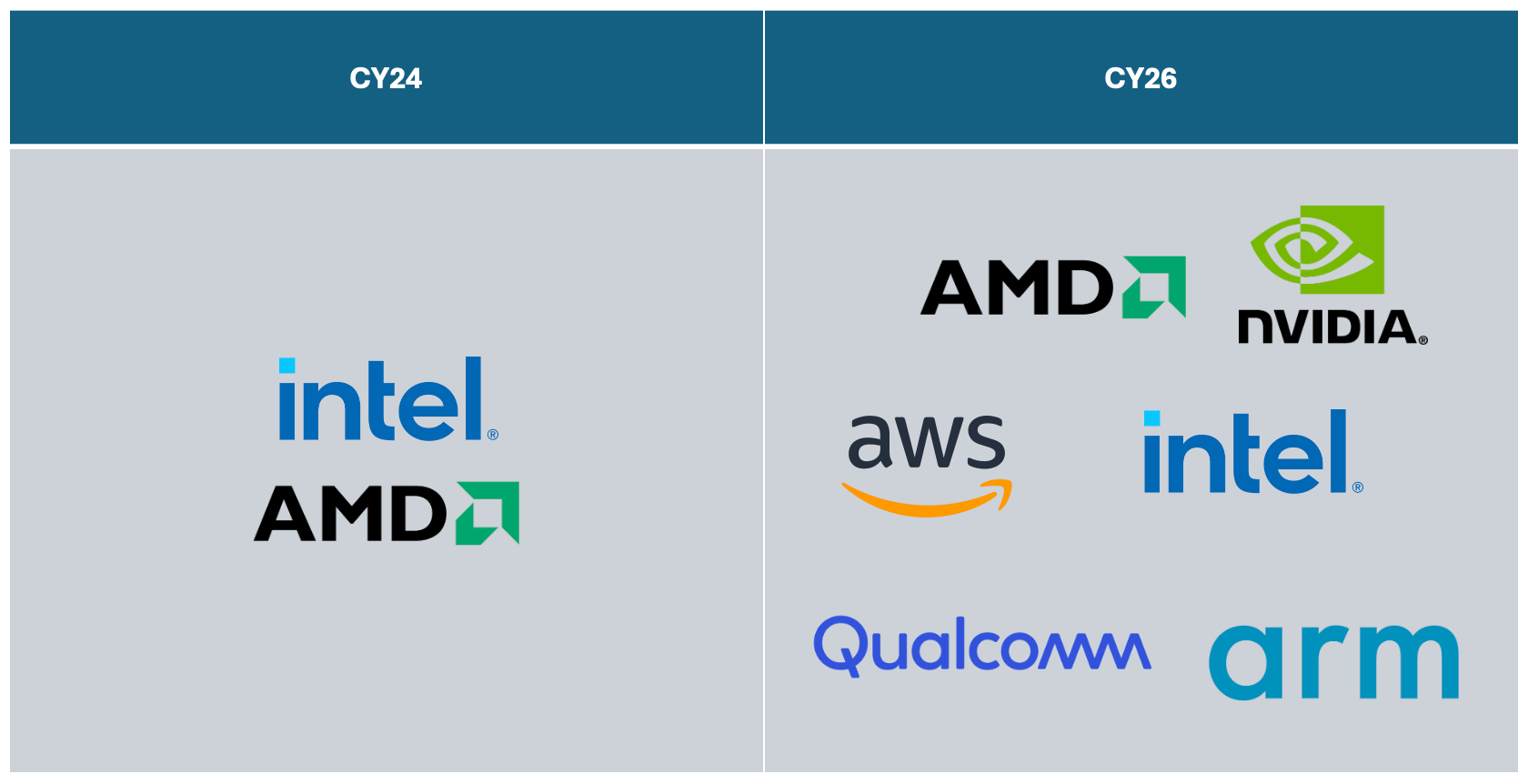
It went from AMD and Intel alone to now AMD, Nvidia, Amazon (Graviton), Intel, Qualcomm, and Arm. They all want a piece of this exciting market thanks to agentic AI. None of this would be possible if the technology wasn’t exciting.
That said - Arm, Intel, and AMD are really the only major players in this market right now, commanding most of the share and the pricing power (as detailed by each 3 in their earnings call).
Now, the reason I called this an “interesting dynamic” is because this market is nothing like GPUs and ASICs. Nothing at all. Infact, the reason why CPUs are rising in demand now is because companies simply forgot about them out of simple misunderstanding, as Dylan Patel calls it - “catch up.”
For years, hyperscalers prioritized massive GPU procurement for training without scaling CPU capacity accordingly. We are now seeing a "right-sizing" phase where companies must purchase a large backlog of CPUs to support the vast fleet of AI accelerators already in production.
What does all of this mean for pricing? supply/demand? volume? sentiment?