
We Need InP
Look into different areas of the InP value chain - substrate, EML chips, etc.

Disclaimer: Not financial advance. Do your own research.
Highlights
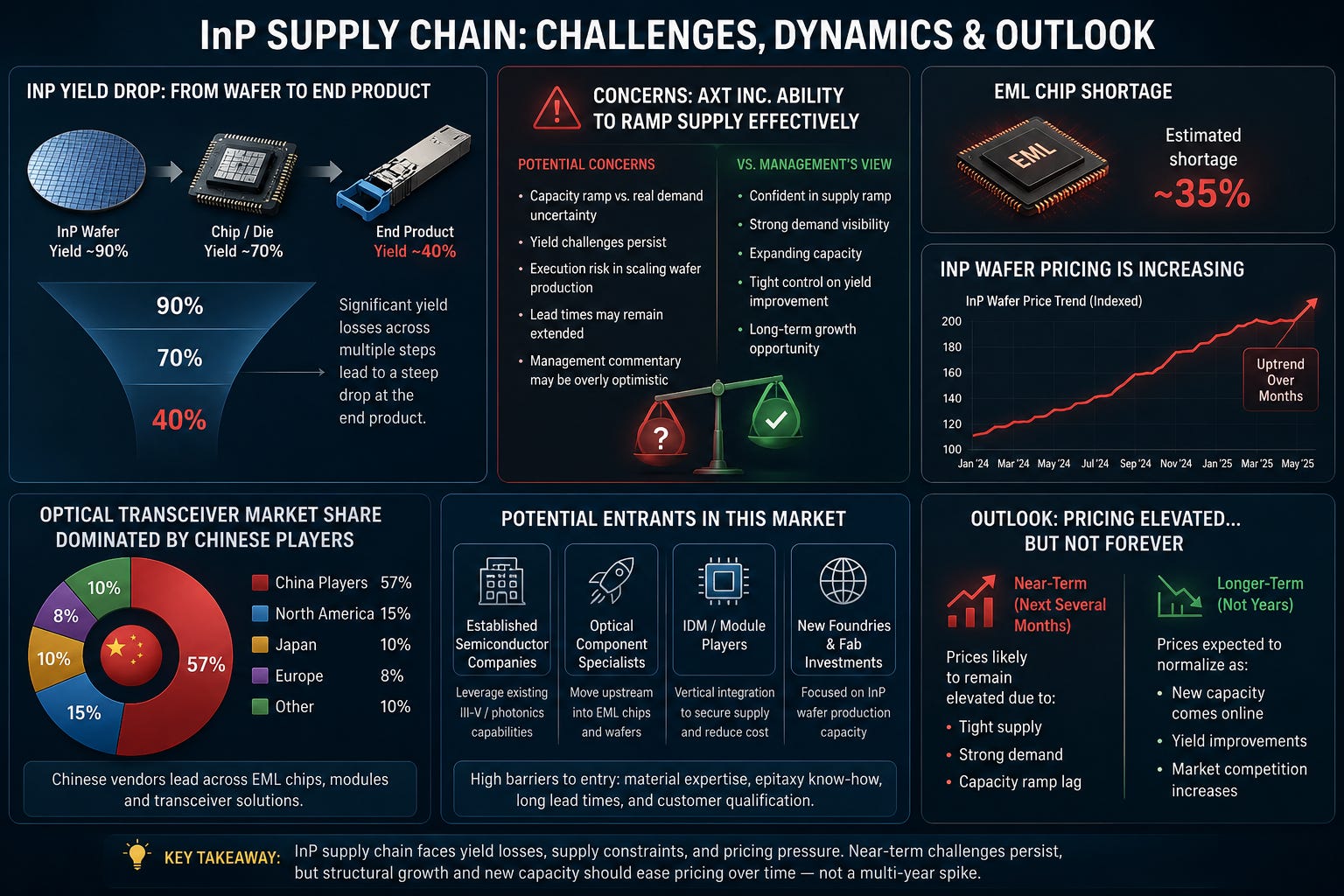
InP yield from 90% —> 40% at end product
Potential concerns about AXT Inc’s ability to ramp supply effectively; countering what management has presented
EML chip shortage ~35%
InP wafer pricing is increasing over the months
Optical transceiver market share dominated by Chinese players
Potential entrants in this market
InP pricing may stay elevated for coming months but not years, etc.
A lot more information presented below.
Table of Contents
[1] Overview of InP
[2] The Numbers: How Big Is The Gap
[3] Why Demand Outran Supply So Fast
[4] It’s Not One Shortage
[5] Substrate & Equipment
[6] China’s Grip on the Raw Material
[7] A Possible US Ban on Chinese Transceivers
[8] AXT Supply Speculations
[9] Outlook
[1] Overview of InP
Indium Phosphide is becoming short in supply, specifically InP wafers, but this stems from the fact China has intentionally constricted export volumes of InP to the West, to limit their ability to expand in the AI race.
InP has become critically important for photonics. In photonics, data is transmitted via light and not electrical signals like copper. The need for photonics is a result of copper hitting something called “copper wall.”
The "copper wall" in AI is a physical limit. At modern speeds, copper wires connecting thousands of AI chips lose data after about a meter. Pushing signals further creates massive heat and wastes energy, forcing the industry to shift toward silicon photonics and data transfer via light.
Today, you can find InP in optical transceivers.
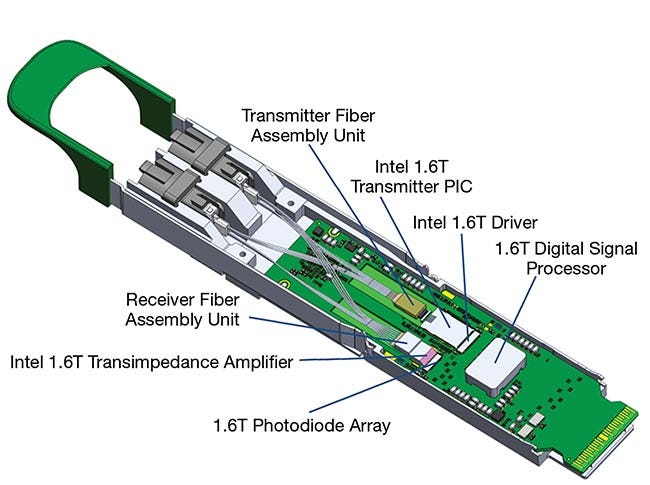
An optical transceiver is a pluggable hardware module that acts as a translator between electrical signals and optical signals.
Inside data centers, AI clusters, and telecommunication networks, servers and switches process data using electricity. However, moving high-speed data over long distances using copper cables hits severe physical limits.
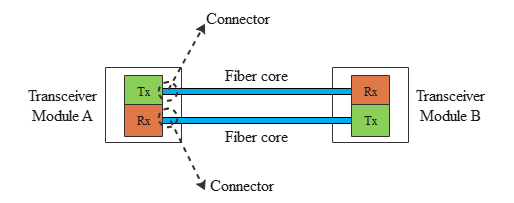
Transceivers solve this by doing two things:
Tx: taking electrical data from a switch ASIC and converting it into pulses of laser light to travel down a fiber-optic cable.
Rx: taking incoming pulses of light from a fiber-optic cable and converting them back into electrical signals that the receiving switch can process.
Because silicon cannot naturally generate light, Indium Phosphide (InP) serves as the core foundational material inside modern high-speed transceivers, such as 400G, 800G, and 1.6T modules, to handle the optical heavy lifting.
Specifically, InP is the foundation of the electro-absorption modulated laser (EML), a device that combines a laser with a built-in optical switch (the modulator) in a single chip. EMLs are the main component inside every 400G, 800G, and 1.6T optical module. No InP-based EML, no functioning high-speed transceiver. That single dependency is why a supply shortage in one compound has become an issue for how fast hyperscalers can physically wire together their AI infrastructure, regardless of how many GPUs they can actually buy.
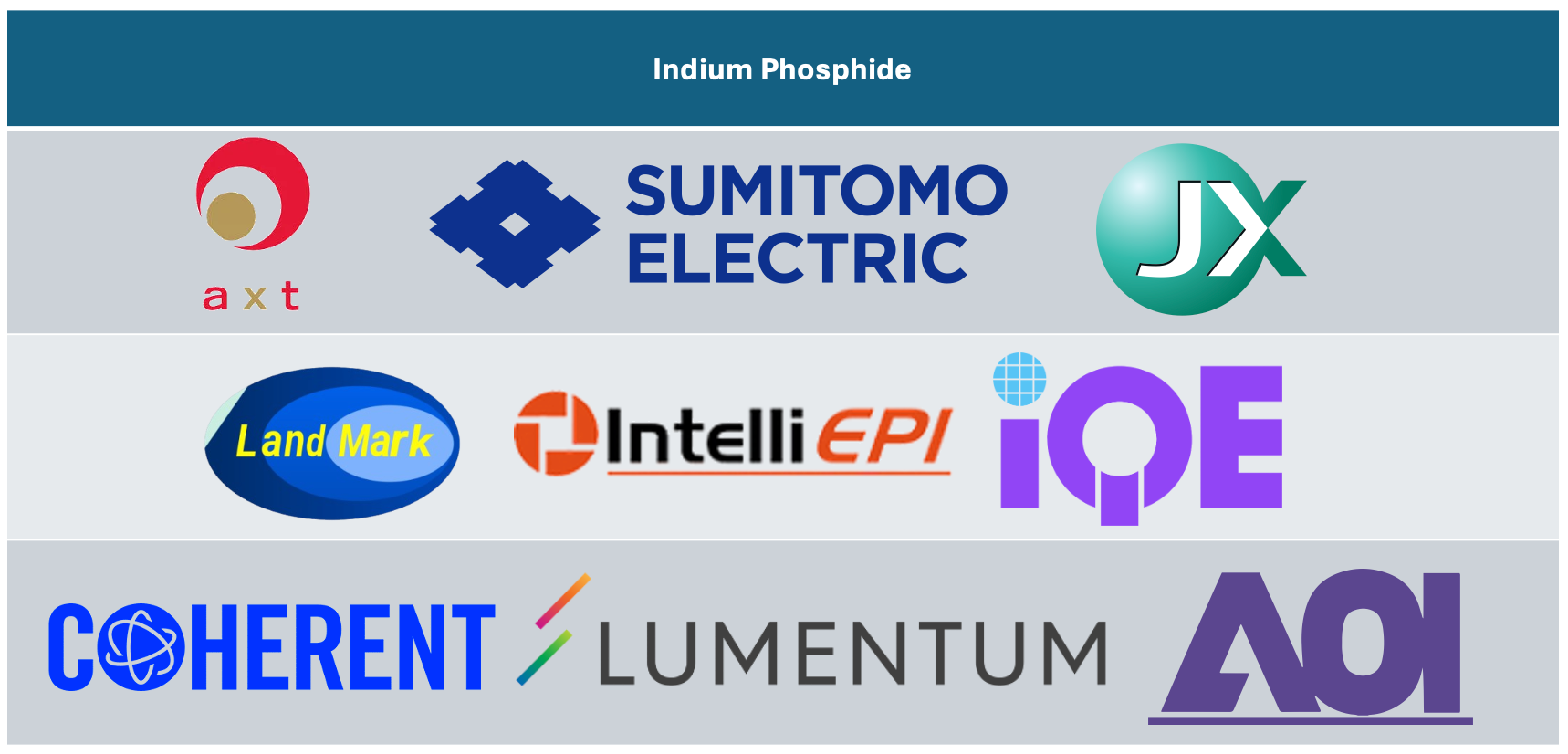
In this market, a lot of market share for the compound is concentrated among AXT, Sumitomo Electric, and JX Advanced Metals. Each company holds 35%, 40%, and 15% market share, respectively.
From here, it goes to the epitaxy players: Landmark Optoelectronics, IntelliEPI, IQE.
These companies grow crystalline layers onto the substrate.
Then you have the “end” product where companies like Coherent, Lumentum, and Applied Optoelectronics make lasers for optics. Coherent, for reference, is vertically integrated making them a special case.
According to one of my subscribers who was able to attend a private call with Sumitomo Electric, and ask questions on InP, he was told by the company along the lines of: